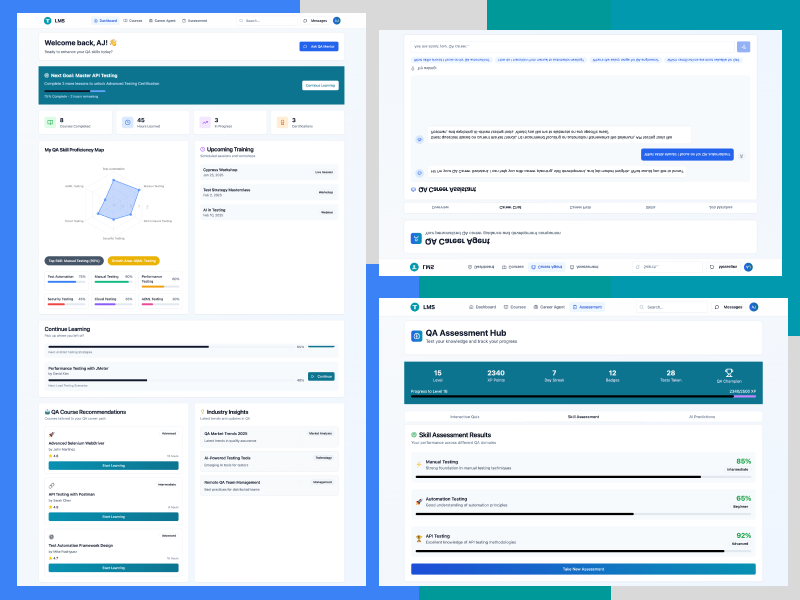
Redefining Learning Careers
An AI-powered LMS with Career Agent
This project was initially delivered as a Digital Product & Learning Designer (UI/UX + LXD).
However, the scope evolved beyond design—into shaping product experience, user adoption, and growth outcomes, aligning with the responsibilities of a Product Experience & Adoption Strategist.
From Digital Product Design → Product Experience → Adoption → Growth
The Problem
Career-focused learning platforms often fail not because of poor content, but because of low adoption, weak engagement, and a lack of real-world relevance.
Users faced:
- Fragmented learning journeys with no clear path to outcomes
- Passive content consumption instead of active experience
- Low motivation due to unclear career impact
- High drop-off after onboarding
This reflects a broader challenge in digital education: transitioning from content delivery → meaningful learning experiences that drive real-world outcomes
The Opportunity
Reimagine the platform as:
A career transformation experience, not just a learning system
Shift focus from:
- Courses → Career journeys
- Content → Experiences
- Users → Active participants
- Completion → Adoption & growth
The Solution
Designed and delivered a career-centered digital learning product that integrates:
- UX (User Experience) → intuitive, guided journeys
- LXD (Learning Experience Design) → applied, outcome-driven learning
- Adoption Strategy → onboarding, activation, engagement loops
- Growth Layer → retention, progression, and habit formation
The Process
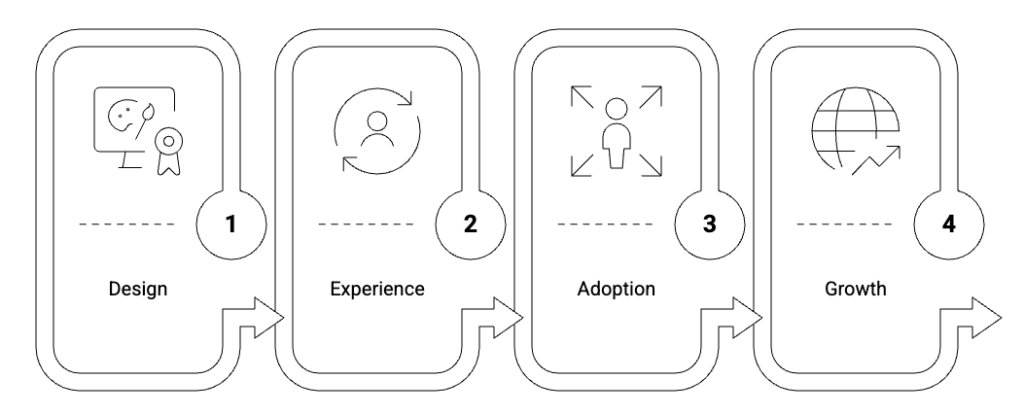
1. Design (Foundation: UX + Product Thinking)
Goal: Build a system that is usable, scalable, and outcome-oriented
Key Actions
- Conducted user & learning behavior analysis
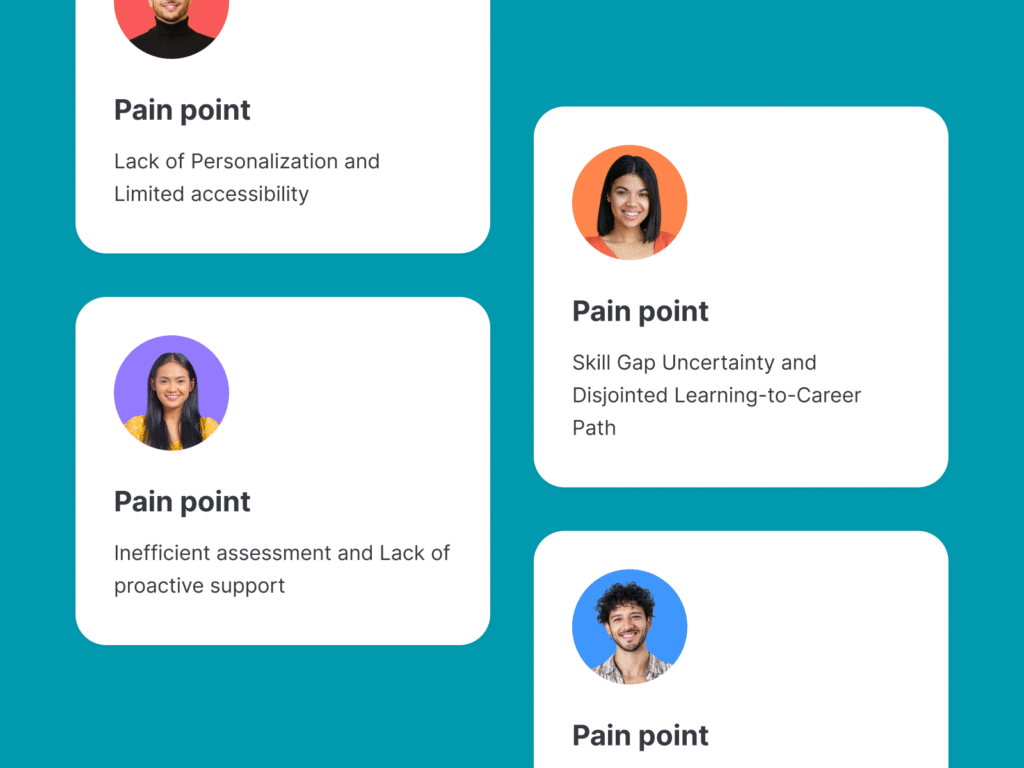
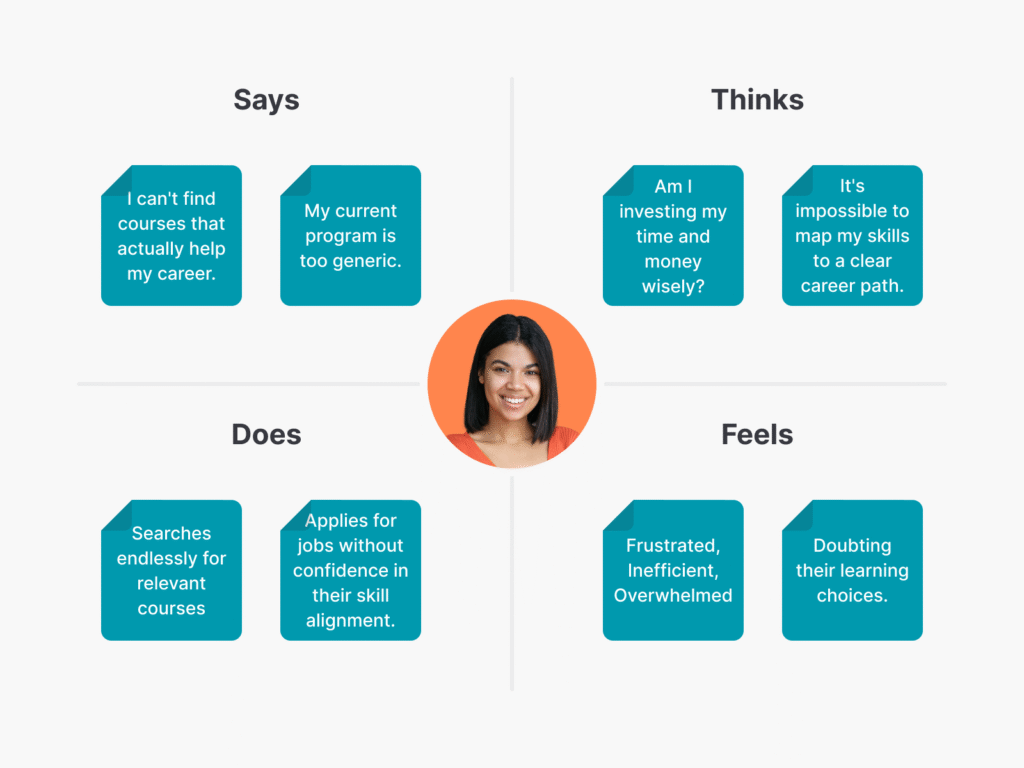
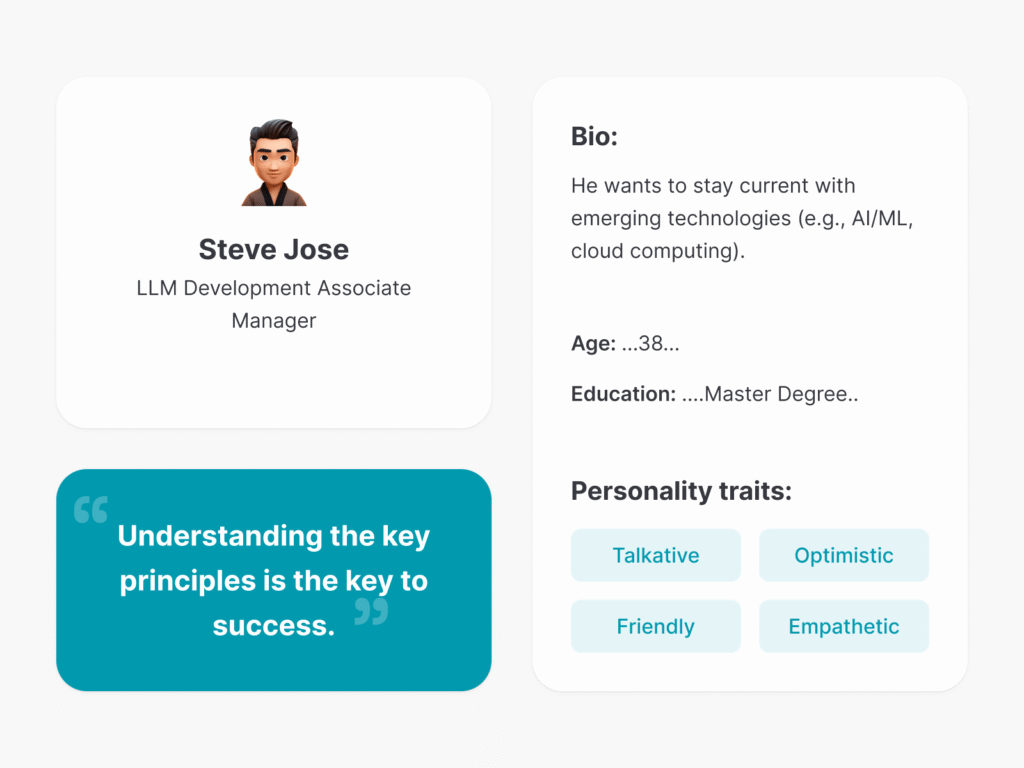
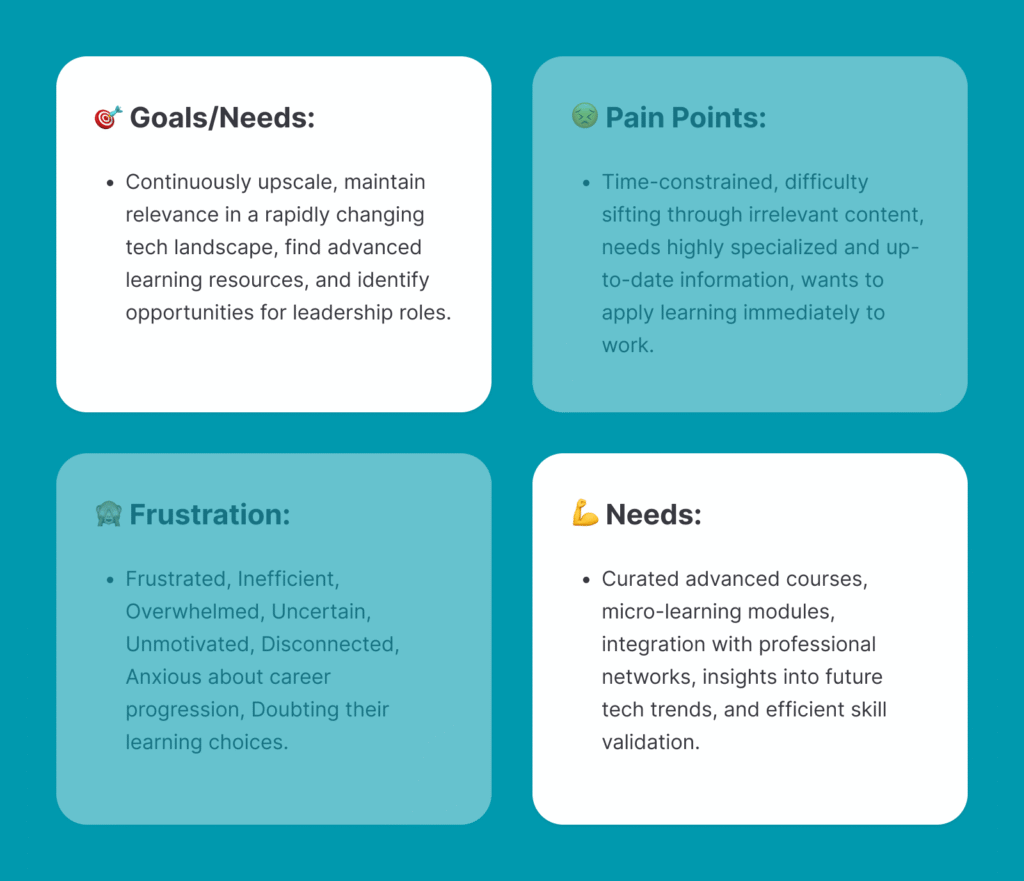
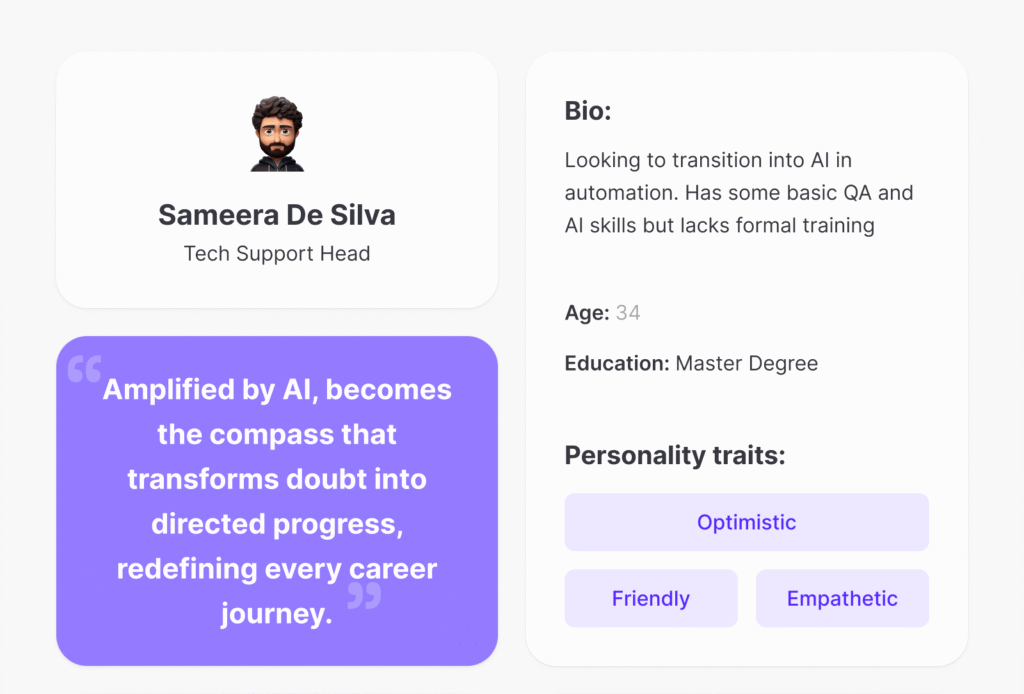
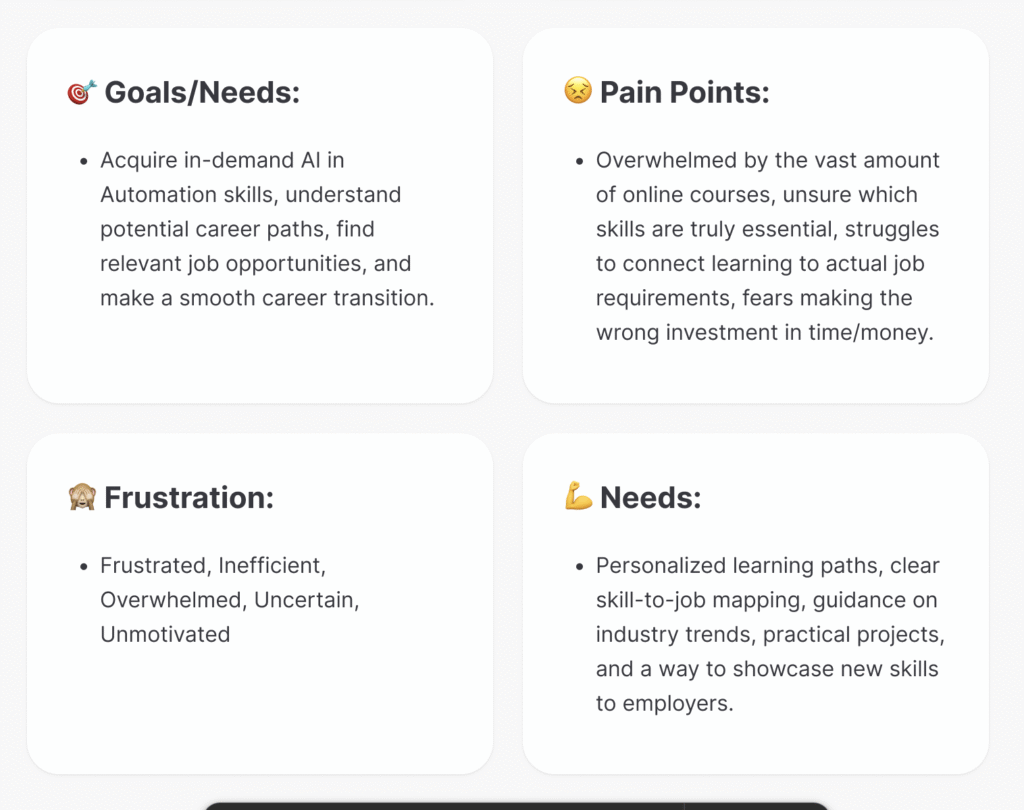
- Defined personas: learners transitioning into careers
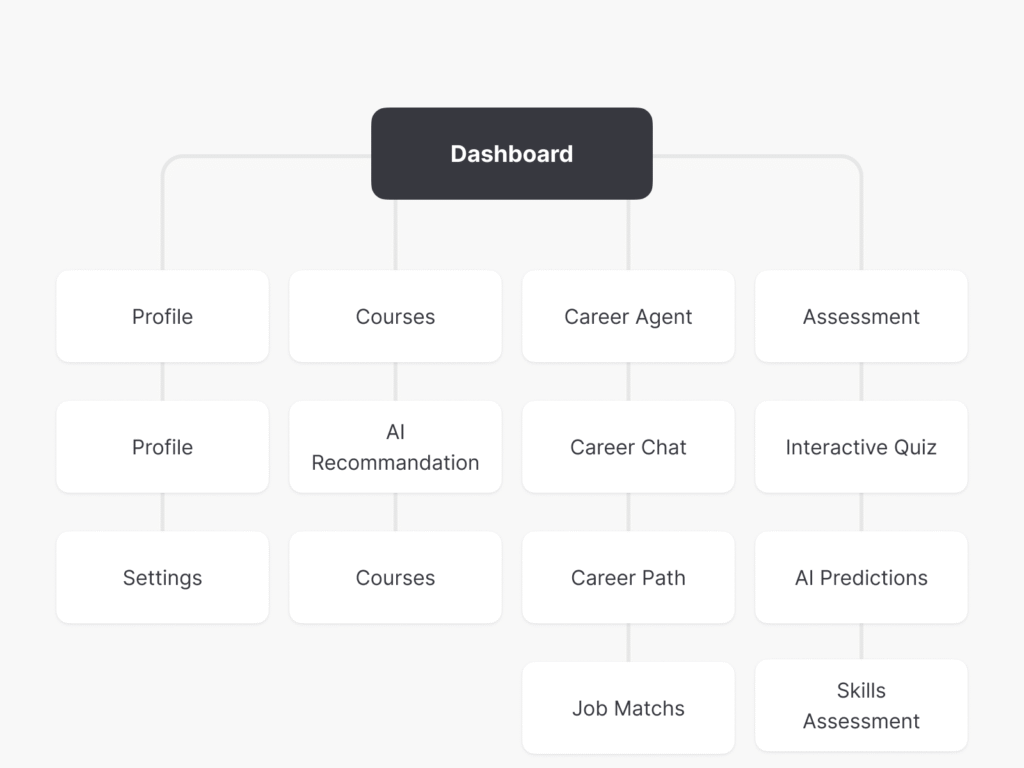
- Mapped end-to-end journey (Discovery → Learning → Career Outcome)
- Designed modular, scalable product architecture
Strategic Shift
From “feature design” → experience system design
2. Experience (LXD + Human-Centered Learning)
Goal: Transform passive learning into active, applied experiences
Key Actions
- Designed learning-by-doing flows (projects, simulations, reflections)
- Embedded real-world career scenarios
- Introduced progressive skill-building journeys
- Built emotional engagement through clarity, feedback, and motivation loops
Research shows that experiential and reflective learning significantly improves confidence and engagement in career development
Strategic Shift
From “content consumption” → experience transformation
3. Adoption (Activation → Engagement → Retention)
Goal: Ensure users don’t just start—but continue and succeed
Key Actions
- Designed structured onboarding journeys
- Introduced guided pathways instead of open exploration
- Built in-product guidance & support systems
- Reduced friction through clear next steps and micro-progress indicators
Adoption Strategy Applied
- Activation: First meaningful learning action
- Engagement: Continuous interaction loops
- Retention: Habit formation through progression
Strategic Shift
From “user acquisition” → user activation & adoption
4. Growth (Retention → Progression → Outcomes)
Goal: Turn engaged users into successful outcomes and long-term users
Key Actions
- Designed progress tracking & milestone systems
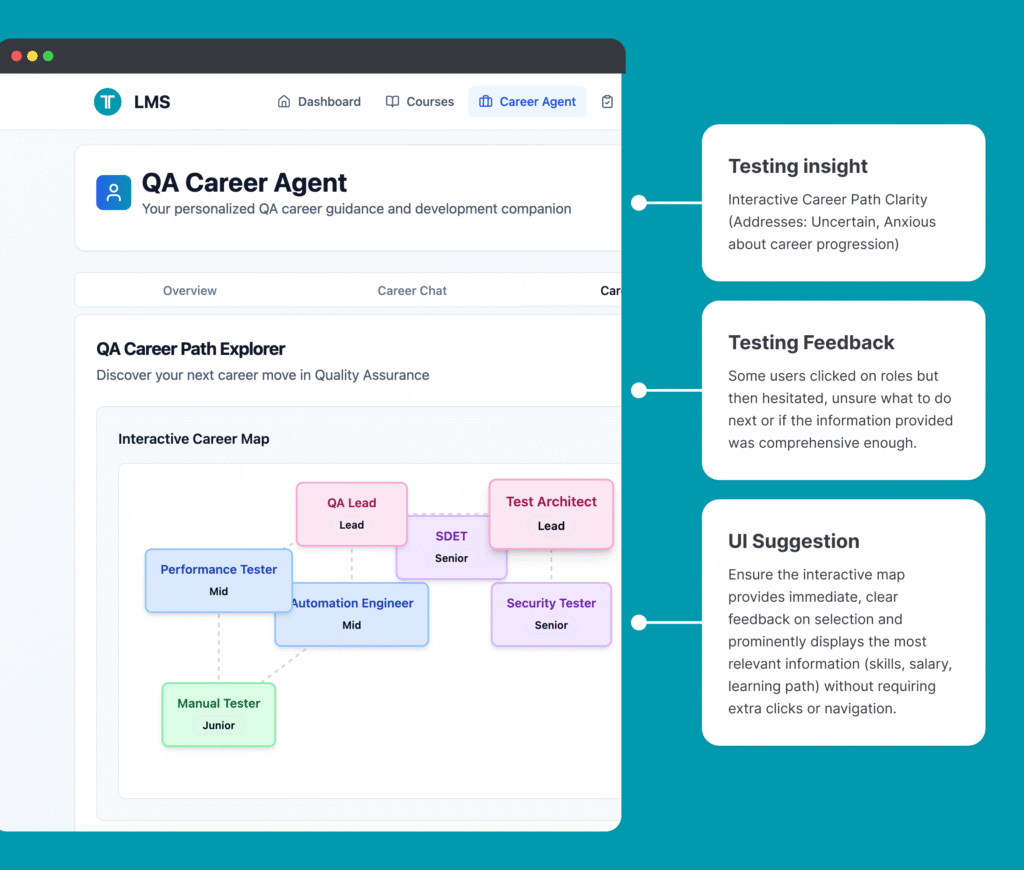
- Enabled visible career progression pathways
- Created feedback loops connecting learning → real-world impact
- Strengthened retention through purpose-driven progression
Outcome Thinking
Growth is not traffic—it’s user success over time
Impact & Evidence of Success
Product Experience
- Improved clarity of the user journey from learning → career outcome
- Reduced cognitive overload with guided flows
Adoption
- Increased user activation through structured onboarding
- Higher engagement via interactive learning experiences
Growth
- Improved retention through progress-based motivation
- Strengthened user commitment with career-aligned pathways
Strategic Impact
- Shifted product from:
- ❌ Learning platform
- ✅ Career transformation experience
My Role Evolution (Proof of Strategist Capability)
Started As
- UI/UX Designer
- Learning Experience Designer
Evolved Into
- Product Experience Architect
- Adoption Strategist
- Growth-Oriented Thinker
Demonstrated Capabilities
- End-to-end product thinking (Discovery → Delivery → Growth)
- Bridging UX + LXD + Product Strategy
- Designing for behavior change, not just usability
- Driving adoption, retention, and user success
Future Opportunities
- AI-powered personalized learning journeys
- Adaptive onboarding based on user intent
- Deeper analytics for adoption & retention insights
- Community-driven learning for network effects
- Integration with real job ecosystems for career acceleration
Key Takeaway
Experience-driven design—focused on outcomes, guided onboarding, and behavior-led systems—drives user adoption, engagement, and sustainable growth.
This project demonstrates my evolution from a Digital Product & Learning Designer to a Product Experience & Adoption Strategist, where I design not just interfaces—but end-to-end systems that drive user adoption, engagement, and growth outcomes.
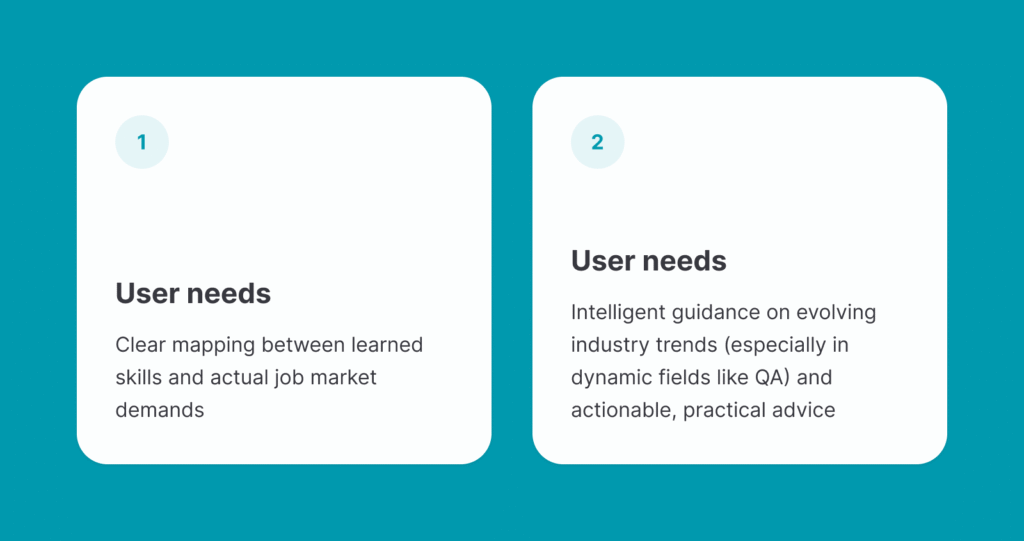
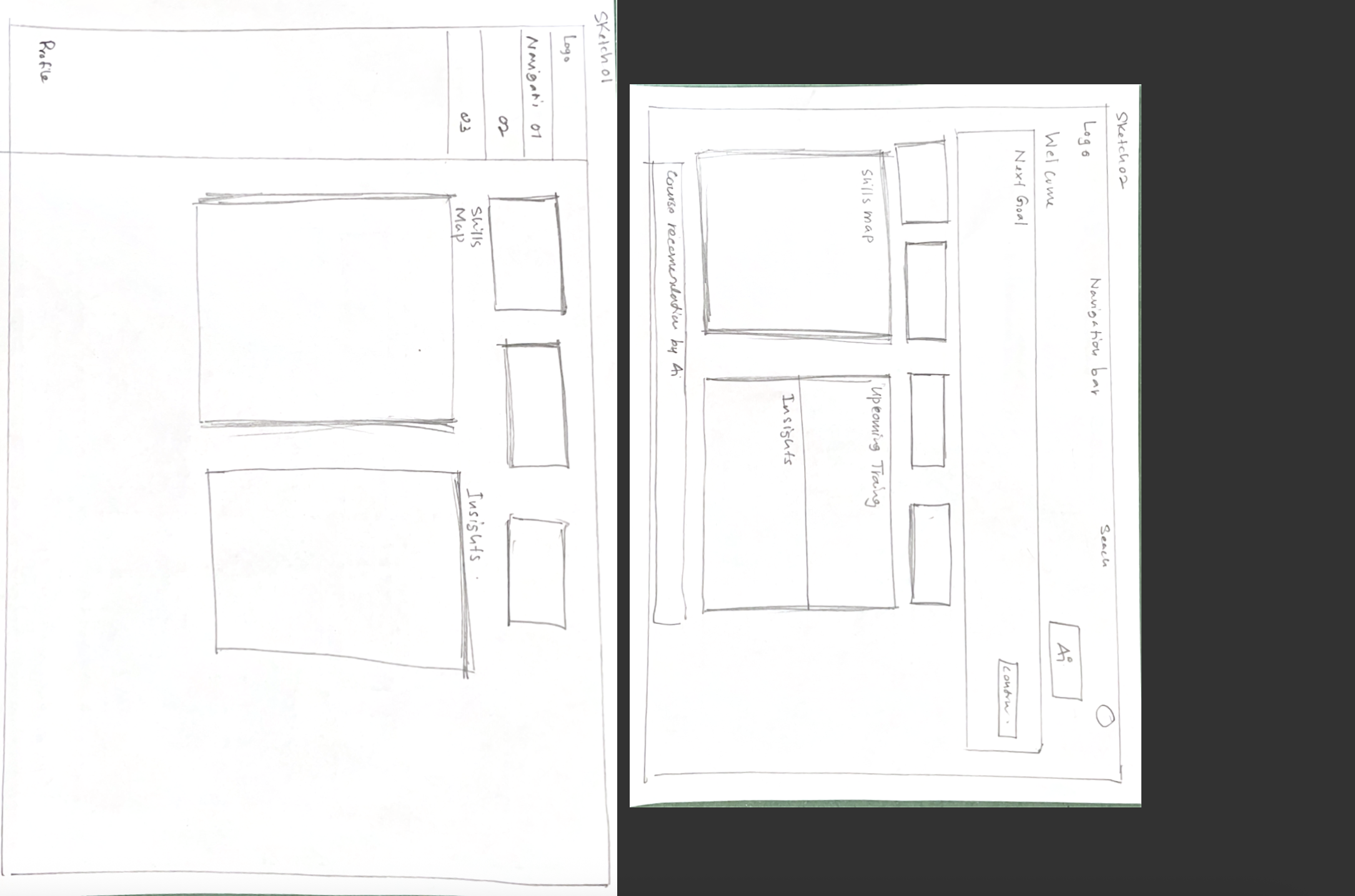
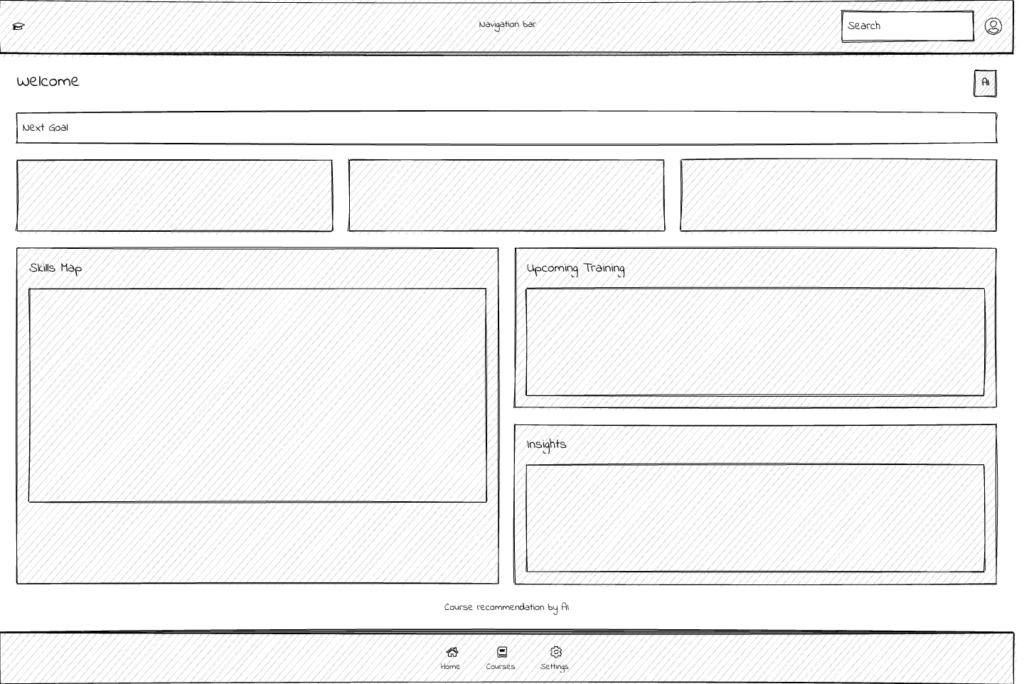
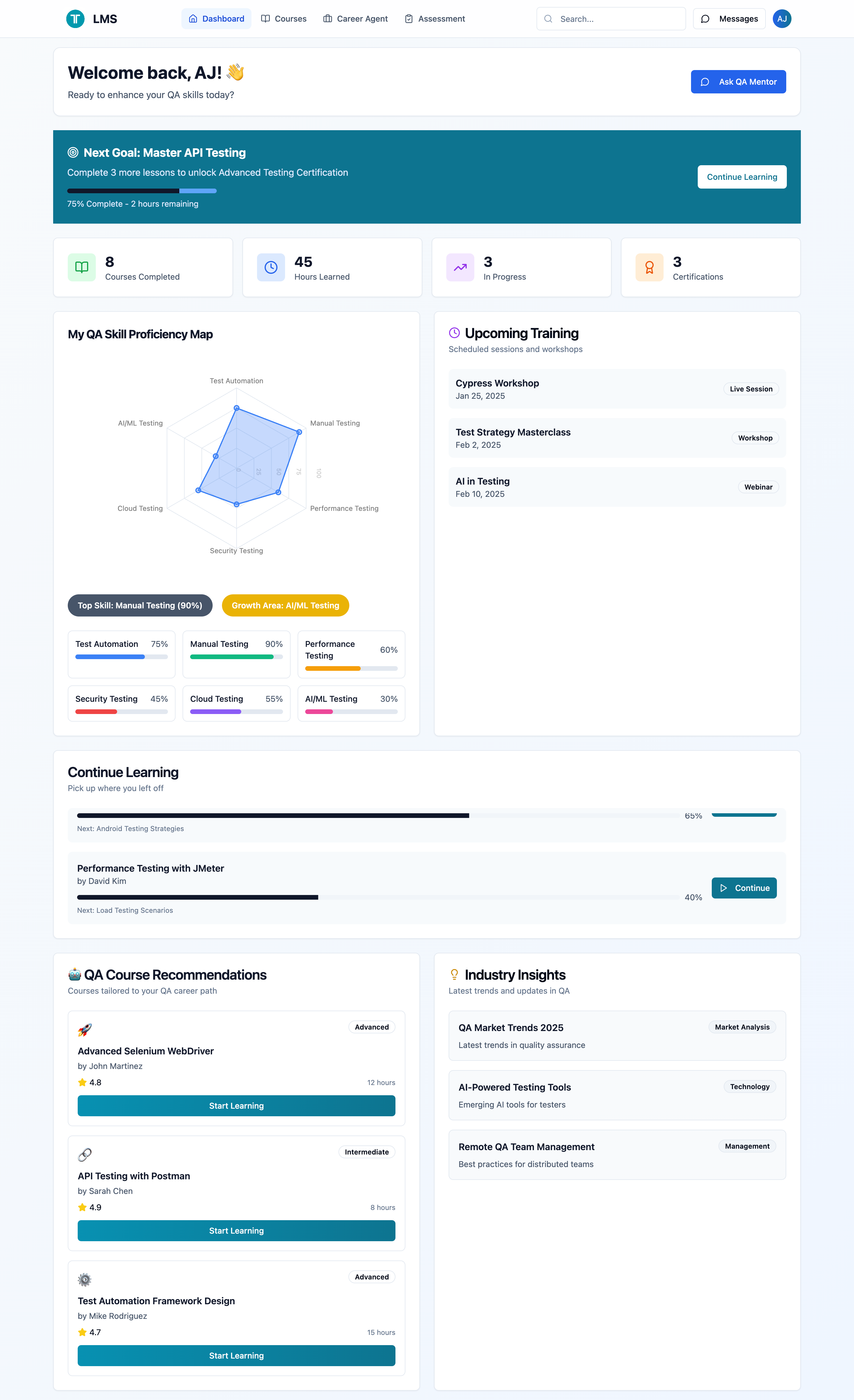
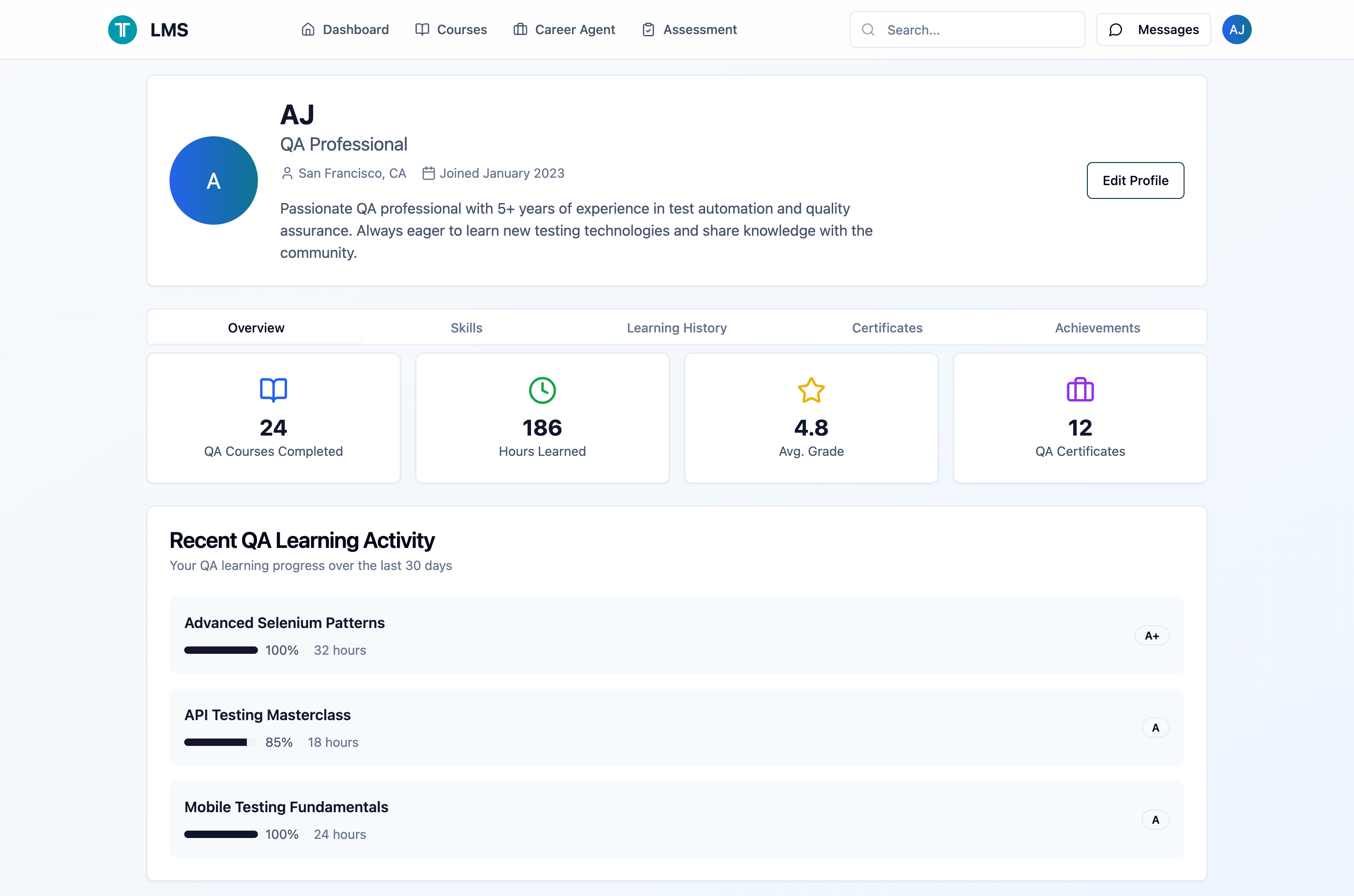
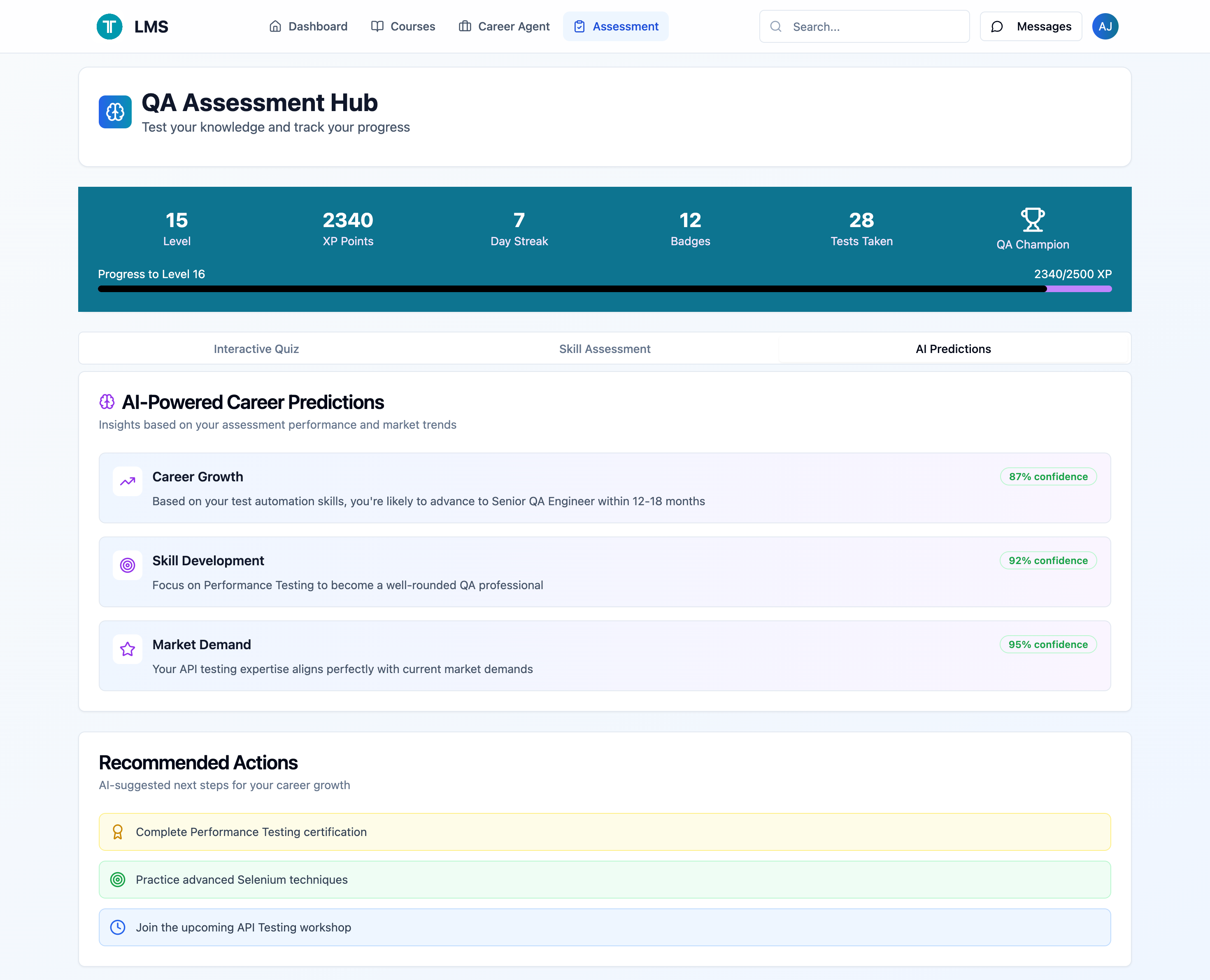
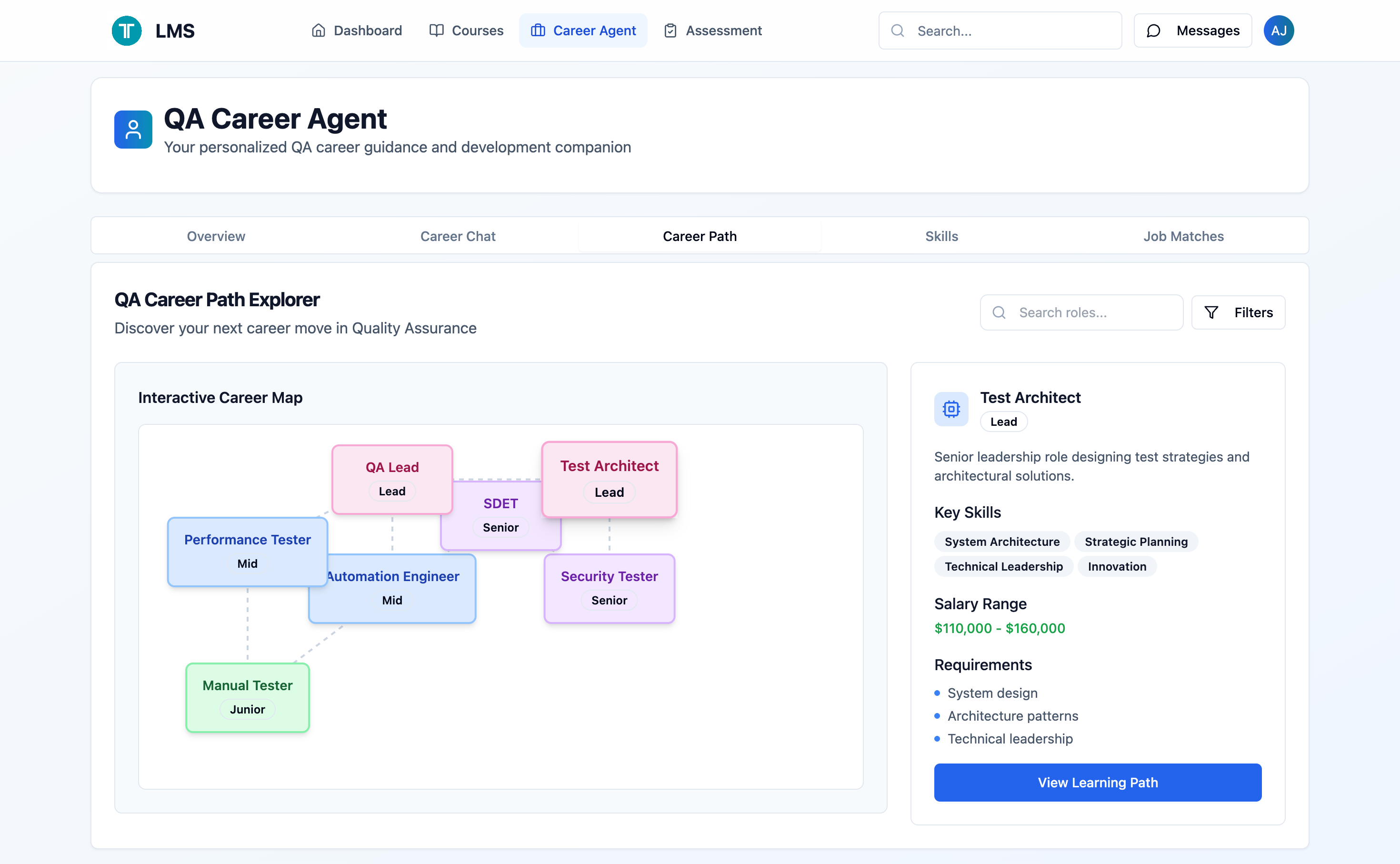
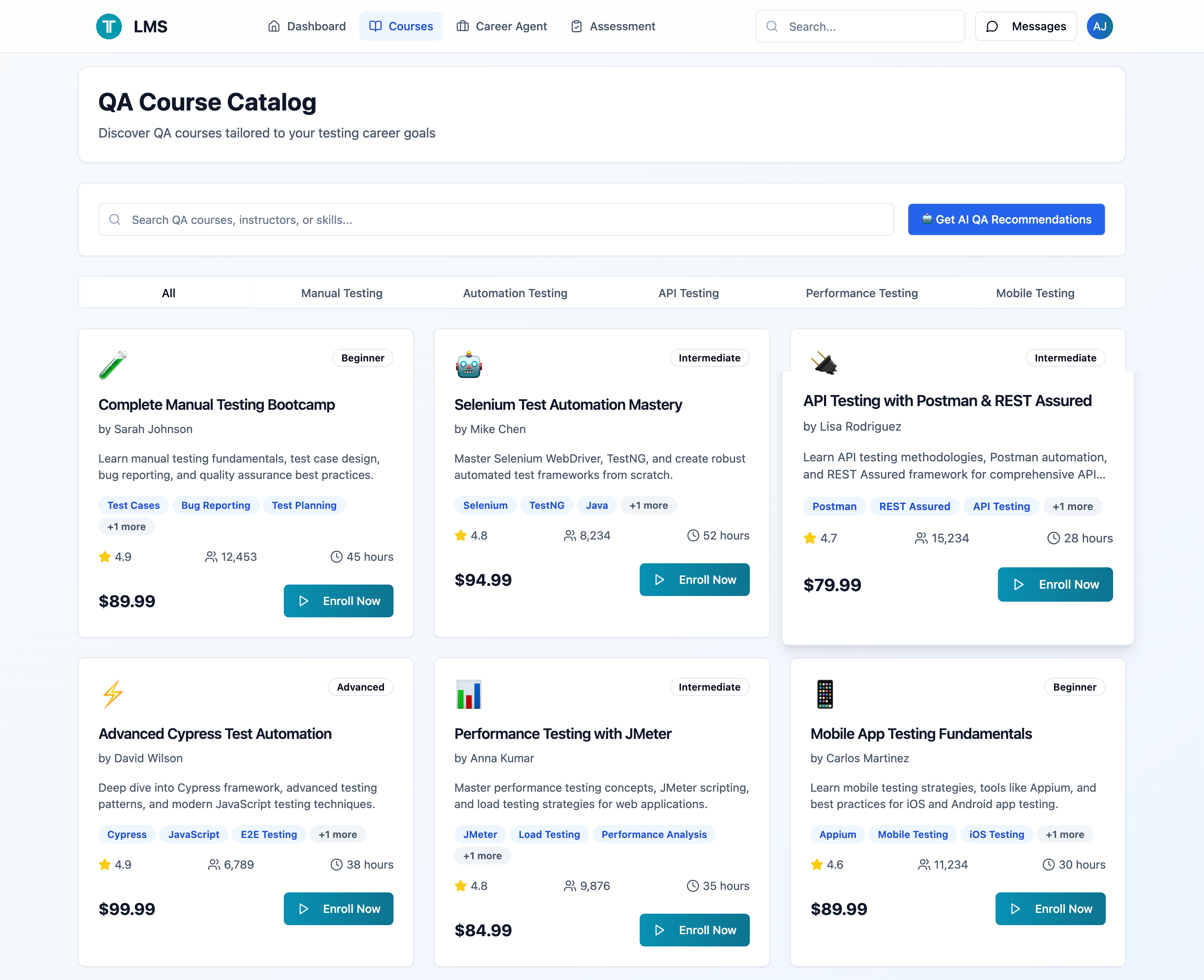
Visual Highlights
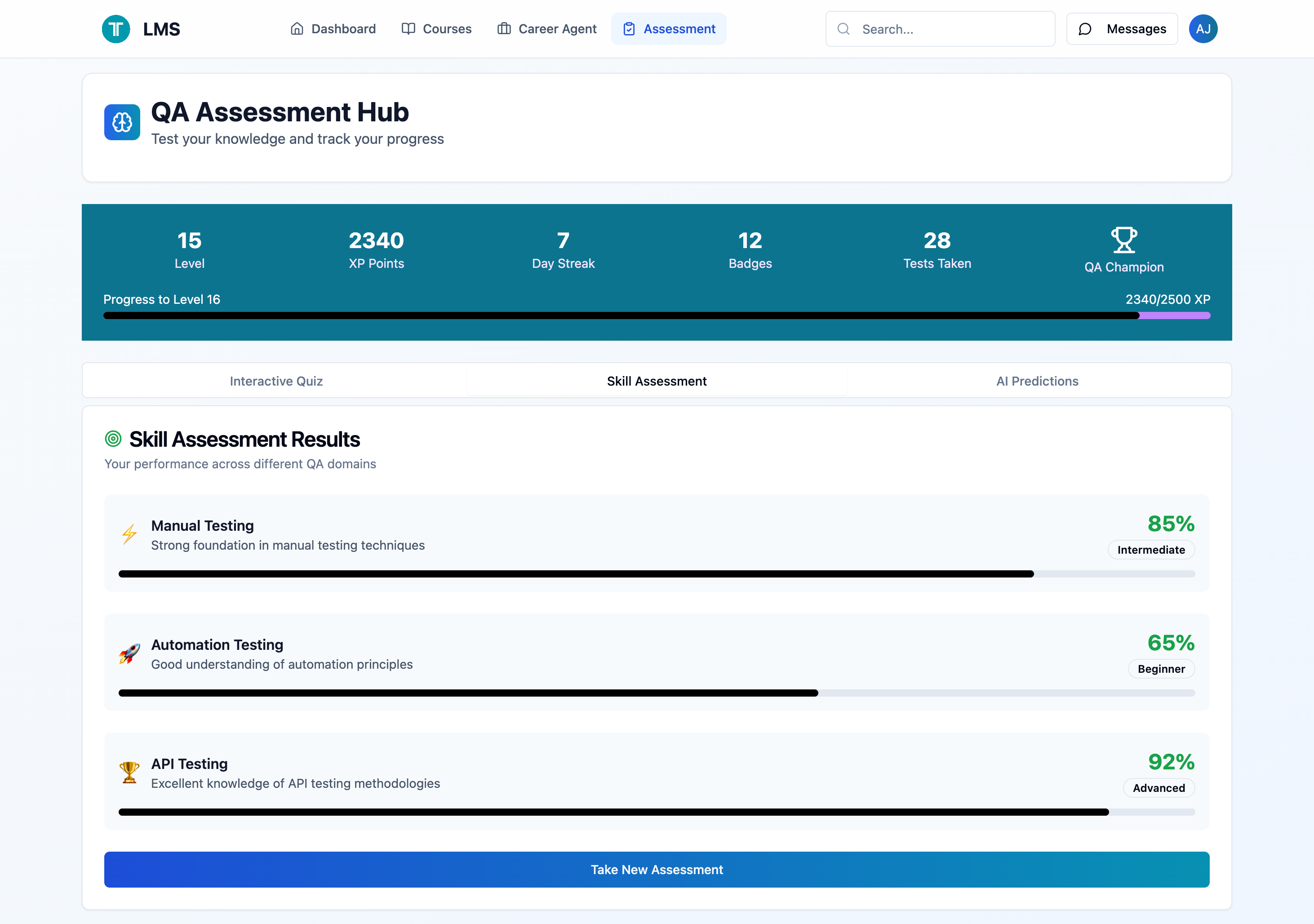
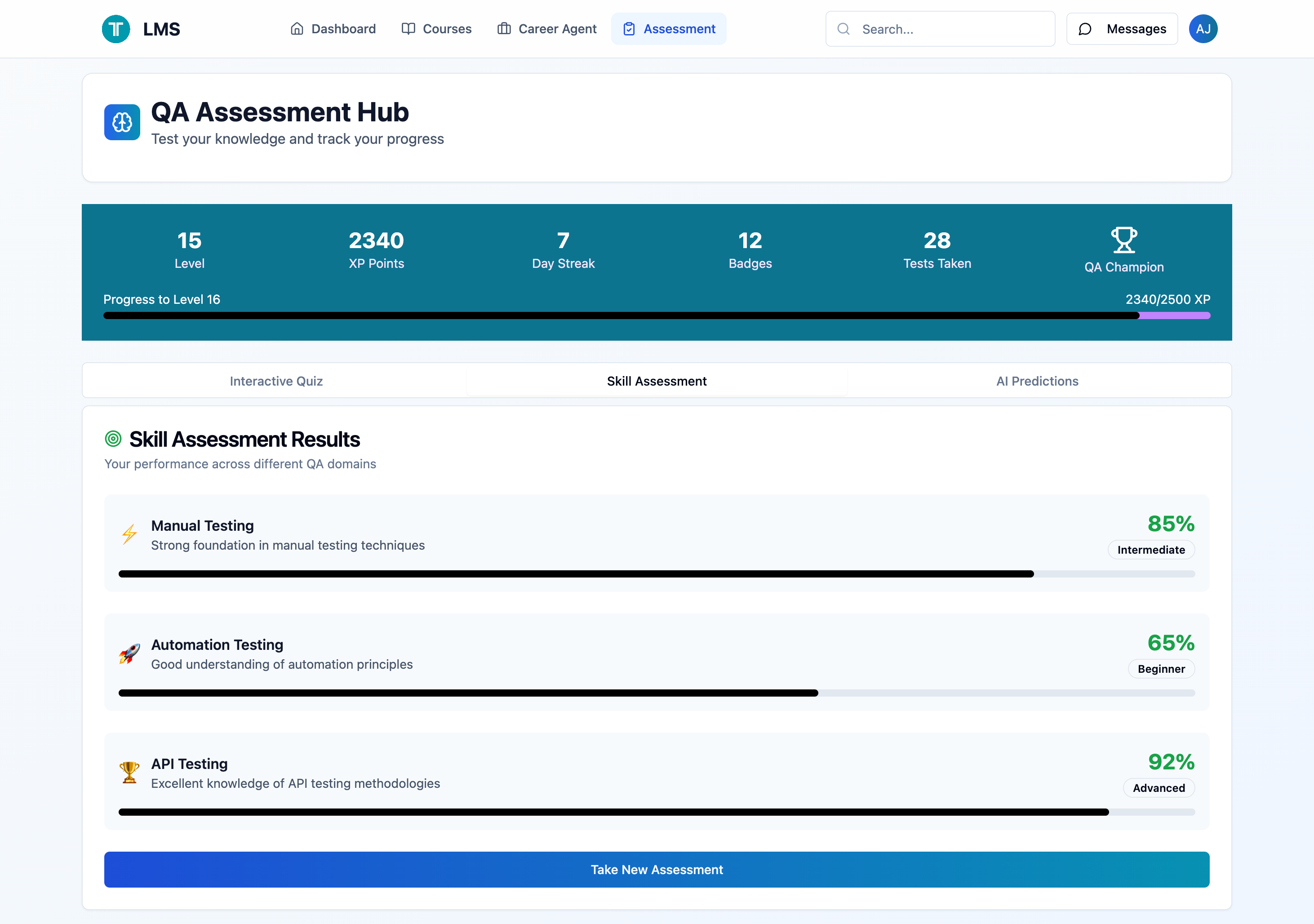
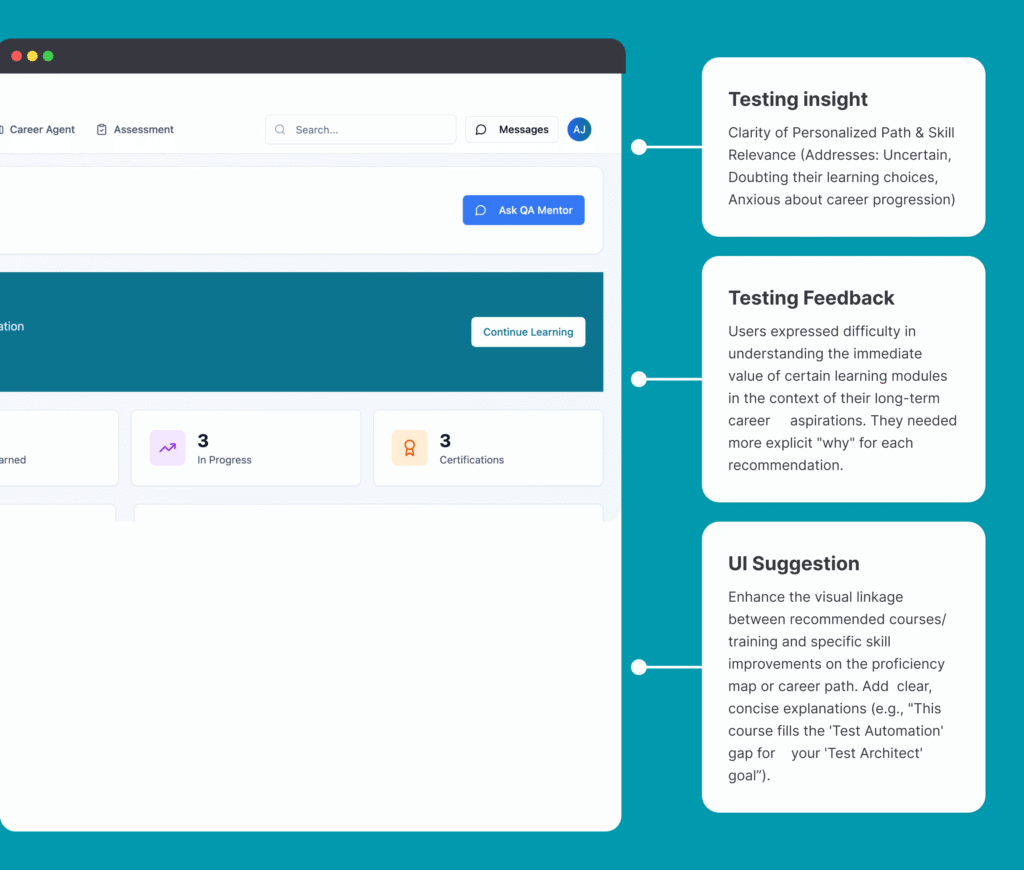
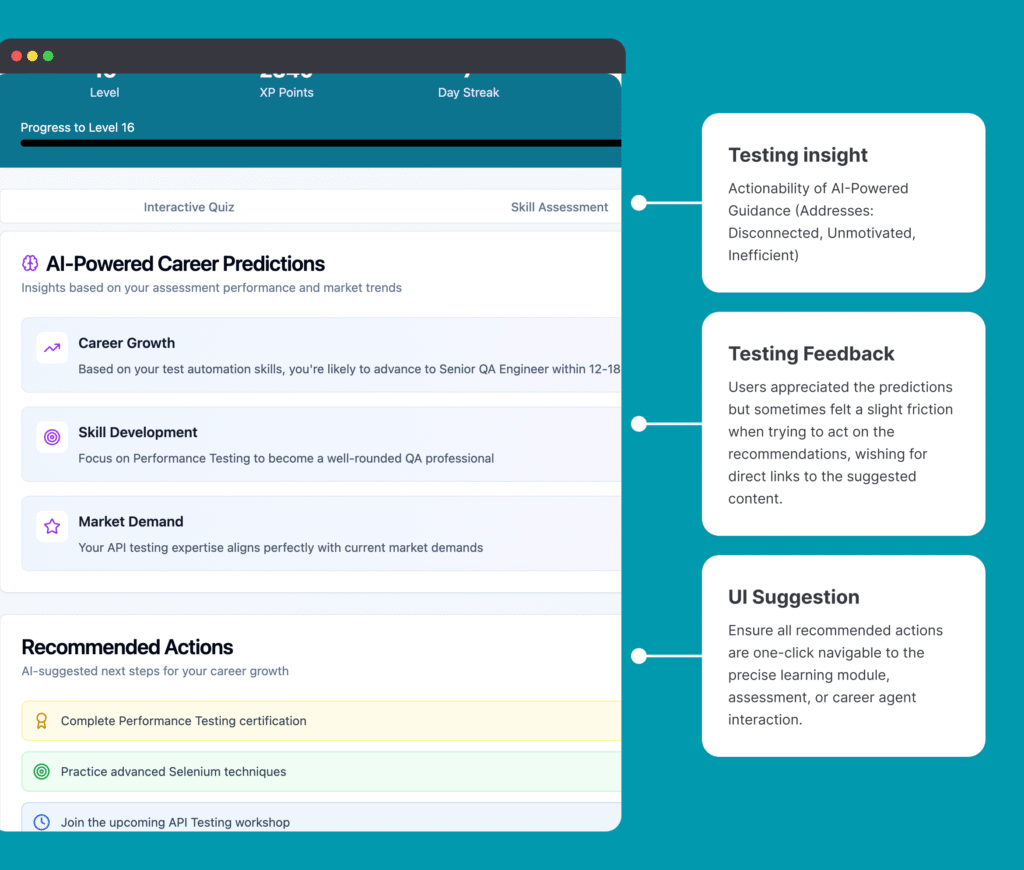
Accessibility Enhancements
To ensure the product is fully inclusive and WCAG-aligned, I implemented a comprehensive set of accessibility improvements across the interface. These updates include
- Added skip links for keyboard users to jump to the main content quickly.
- Applied ARIA labels, roles, and attributes across navigation, buttons, forms, and regions.
- Refactored structure using semantic HTML (
<header>,<main>,<nav>,<section>,<article>). - Designed enhanced focus states with clear and visible focus rings.
- Improved screen reader support using
aria-label,aria-current,aria-live, andsr-only. - Added reduced motion support for users who prefer minimal animation.
- Implemented high-contrast mode for better visibility.
- Ensured a logical heading hierarchy (h1 → h2 → h3) for readability and assistive tech.
- Improved form accessibility with labels, hints, and proper search roles.
- Updated progress indicators using correct ARIA attributes.
- Marked decorative icons
aria-hidden="true"to avoid screen reader clutter.
These improvements make the product significantly more usable for all users, including those with visual, cognitive, and motor disabilities. Initial Design Case Study is here
Please note: Due to company confidentiality and copyright restrictions, I am unable to include any actual screenshots or visual assets from the this project.